- Where the water goes
- Down through floors, along joists, into wall cavities below, and into lower levels and crawlspaces
- What holds it
- Insulation, subfloor, bottom plates, carpet pad, drywall bottoms and finished basement walls
- What drying is measured against
- Readings from comparable dry material in an unaffected part of the house, called a dry standard
- Typical tools
- Moisture meters, thermal cameras as a guide, dehumidifiers and air movers
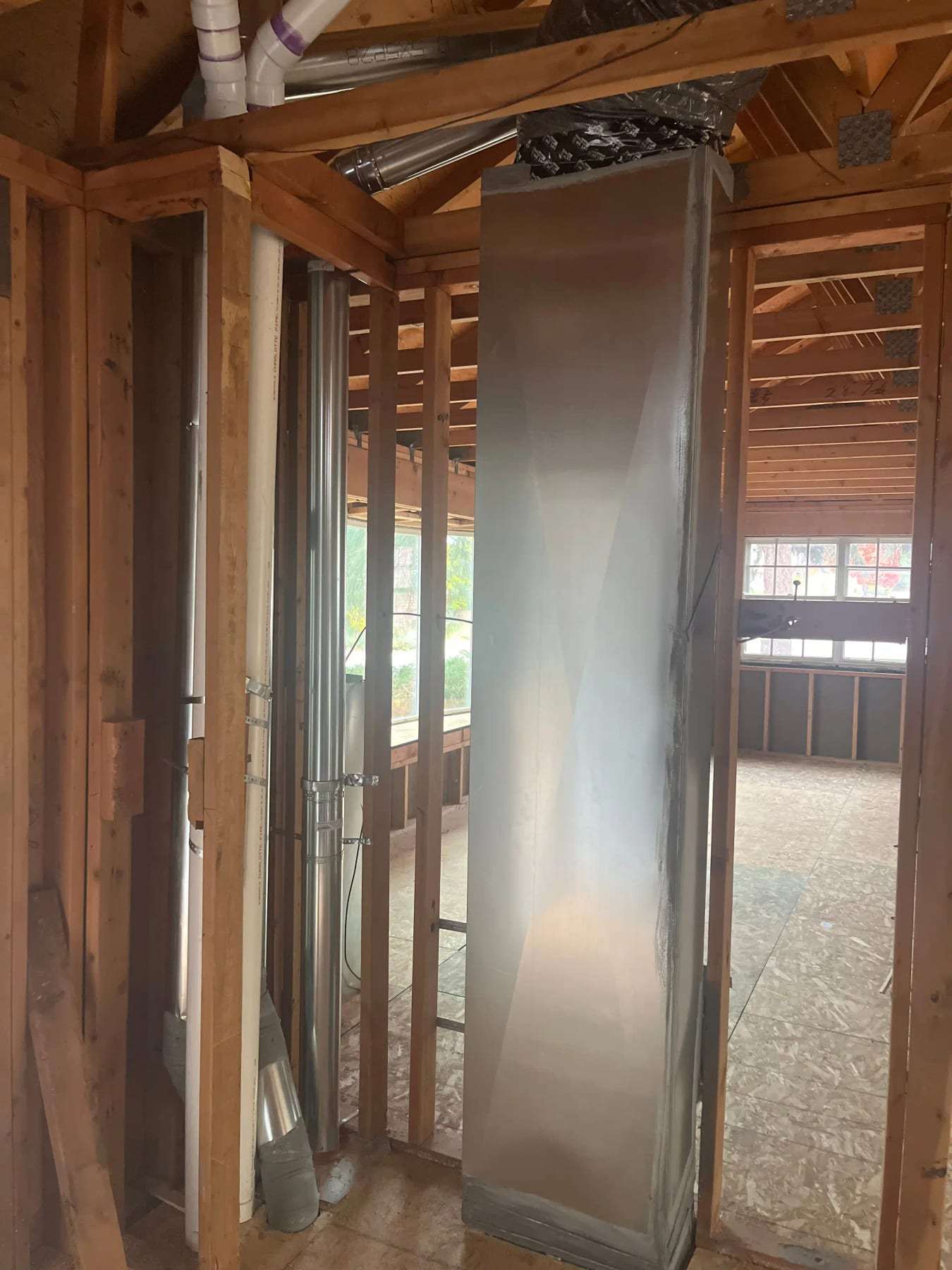
Gutted interior showing exposed framing and new ductwork. Example of the work involved; the photo does not show a specific property or a job for this site.
Why fire jobs are wetter than they look
Fire hoses deliver a lot of water quickly, and it does not stay where it was aimed. In a two-story house it runs through the ceiling of the room below, down interior walls, and into the basement. In a split-level, common across Westminster's older neighborhoods, it can travel down half a level into the family room and then into the lower level beneath that. Townhome rows sometimes see water cross into an adjoining unit along shared floor framing.
Colorado's dry air helps, but it does not dry a soaked subfloor or a wet bottom plate on its own, especially once the house is closed up and the heat is off. Without active drying, wet framing can grow mold in the cavities while attention is on the burned rooms.
Where drying fits in the fire timeline
- First days
- Standing water extracted; soaked carpet, pad and insulation removed; drying equipment set where it is safe to run power.
- During demolition
- Drywall cut above wet lines; cavities opened so air can reach framing; readings taken and recorded.
- Daily or every few days
- Readings repeated at the same marked spots to show progress toward the dry standard.
- Before sealing framing
- Wood confirmed dry so odor sealer bonds and moisture is not trapped.
- Before insulation and drywall
- Final readings documented and shared with the rebuild contractor and adjuster.
Ask for these drying records
- A sketch showing where readings were taken, with the dry standard for each material.
- Dated readings from start to finish.
- A note of any area that could not be dried and was removed instead.
- Confirmation that lower levels and adjoining units were checked, not just the fire floor.
Common questions
Can the rebuild contractor start upstairs while the basement is still drying?
Often yes, as long as the areas being closed up have reached their dry targets and drying equipment can keep running below. Ask how the two activities will be kept from interfering, such as dust from drywall work reaching drying equipment.
General information for Westminster, not a quote or professional advice. In an emergency, call 911.