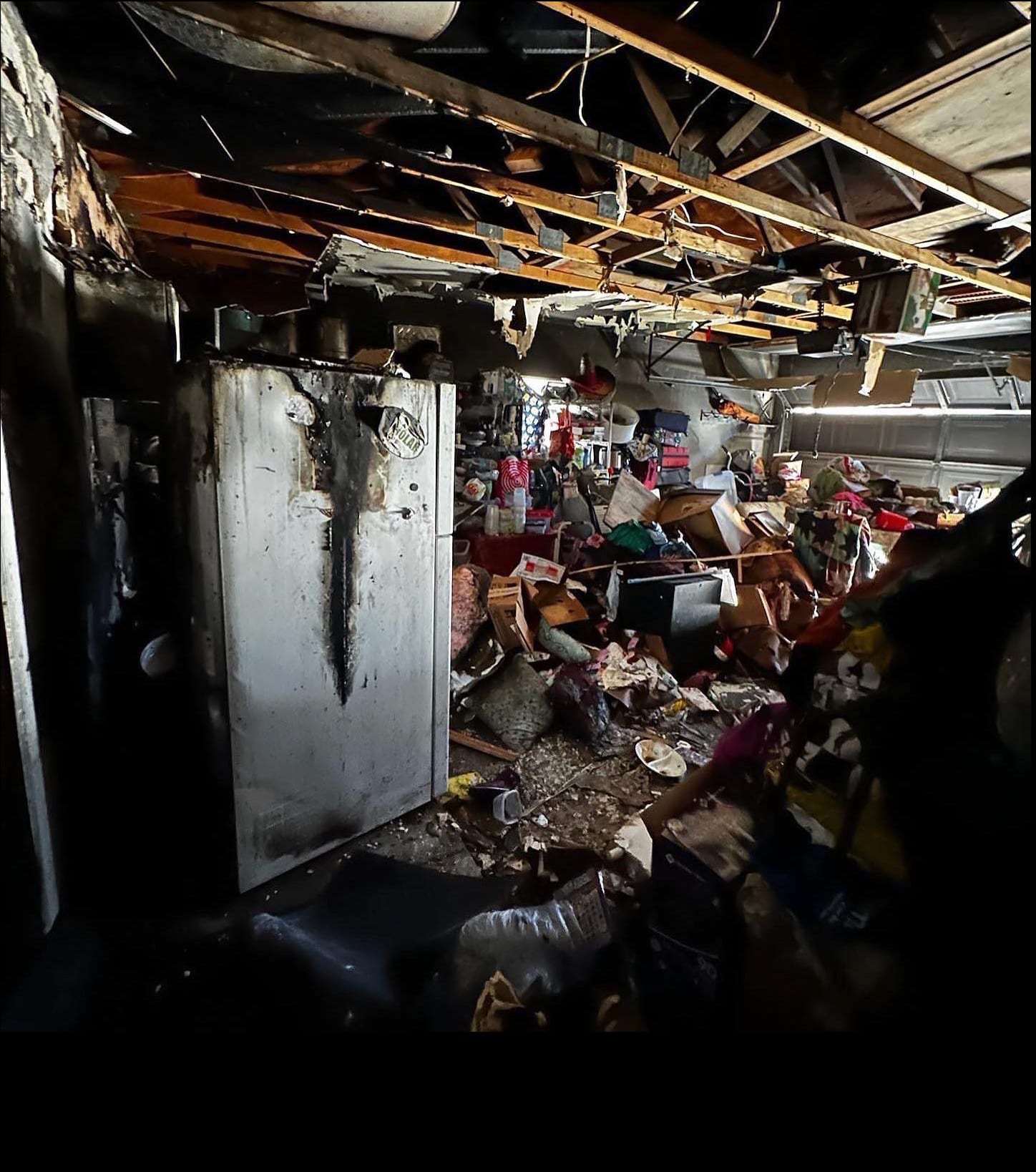
Fire-damaged room with a burned ceiling and debris. Illustrative only: this photo is not from a job tied to this site or a specific address.
What char does to wood
When wood burns, its outer layer turns to char, which has essentially no strength. Under the char is a thin zone of heat-affected wood, and under that is wood that may be largely unaffected. A stud that is only surface-blackened may keep most of its strength. A joist that lost a substantial part of its depth on the bottom edge, where tension is highest, may not be safe to keep even if it still looks solid from above.
That is why the decision starts with removing loose char and measuring what remains, not with how black the wood looks. Soot stains with no depth loss are a cleaning and odor problem. Measurable loss of section is a structural problem.
Typical outcomes by condition
A builder, inspector or engineer makes the actual call. These patterns help you follow the conversation.
- IfSoot or smoke staining only, no char depth, wood sounds solidThenClean, then seal with an odor-blocking primer before the wall closes.
- IfLight surface char on a non-bearing studThenOften scraped or sanded to sound wood, then sealed, if the inspector agrees.
- IfNoticeable char on a bearing stud, joist or rafterThenA new full-length member is often fastened alongside (sistered), or the member is replaced.
- IfDeep char, cracking, or sagging in a beam, header or trussThenReplacement, usually with an engineer's direction and a permit.
- IfEngineered lumber such as I-joists or trusses shows any heat damageThenExpect replacement or a manufacturer or engineer repair detail; these products are not patched like solid lumber.
Sistering versus replacing
Sistering
- Keeps the damaged member in place and adds a new one alongside
- Less disruption to finishes and connected framing
- Old member still needs cleaning and sealing for odor
- Needs room alongside, which ducts or wiring may block
Replacing
- Removes the char and its odor source entirely
- May require temporary shoring while the member is out
- More demolition of finishes above or below
- Often the only option for engineered products or severe damage
Ask to see this before the walls close
- Photos of each charred member after loose char was removed.
- Which members were kept, sistered or replaced, marked on a simple sketch.
- Any engineer's letter or inspector comments about the repairs.
- Evidence that kept framing was cleaned and sealed, not just painted over.
General information for Westminster, not a quote or professional advice. In an emergency, call 911.