Scenario 1
Attached garage fire
A fire in the garage damages the shared wall, the room above, and the roof structure, and the rest of the house has smoke damage.
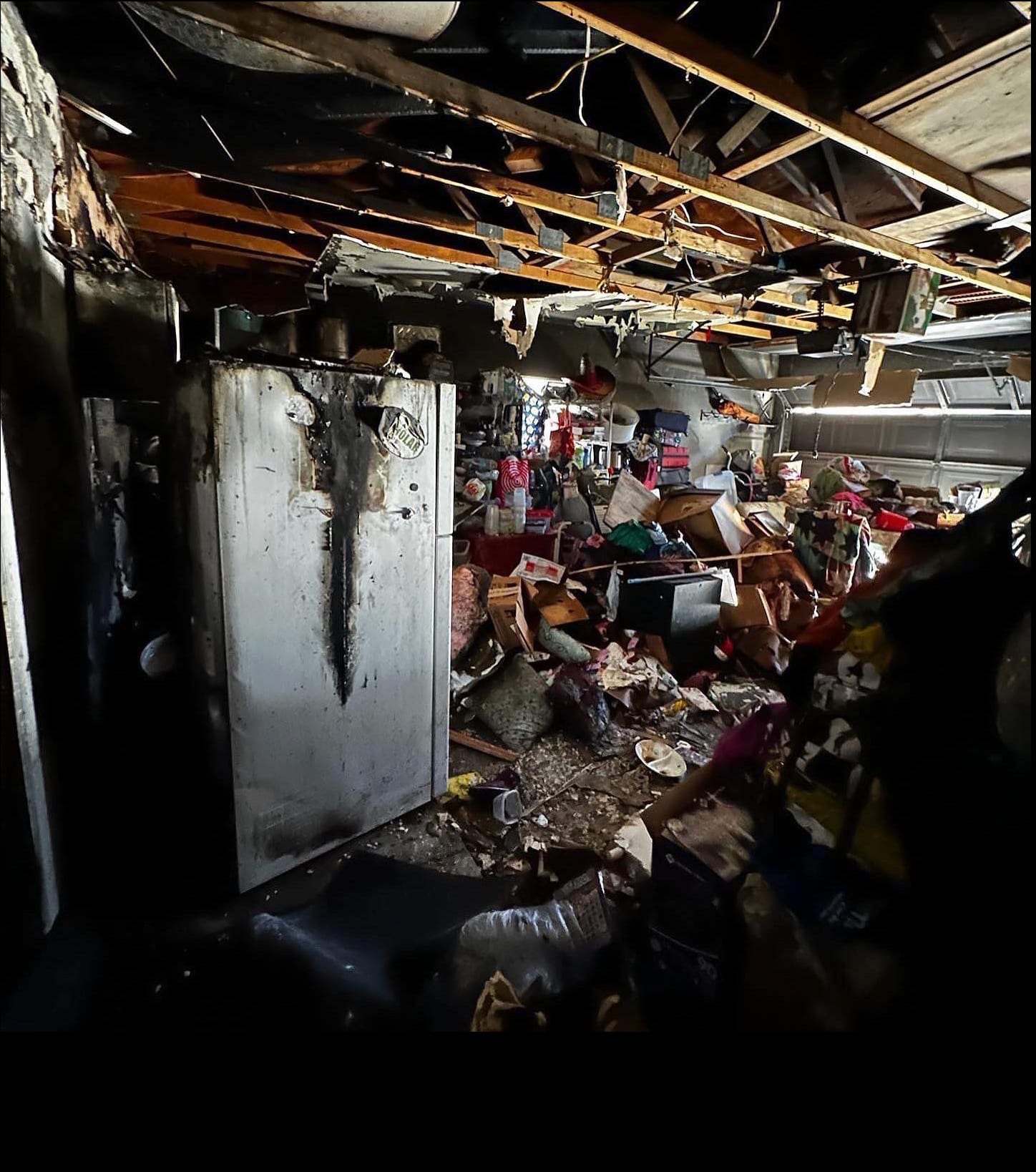
Cleanup, soot removal, and structural repairs after a fire, and how to decide whether one company should manage the whole recovery or separate cleanup and construction crews.
After the emergency phase of a fire (securing the building, removing debris, cleaning soot, and drying water from firefighting), most homeowners face repairs: replacing framing, roof decking, drywall, cabinets, flooring, and finishes. Those repairs need permits, inspections, and a contractor who understands what the insurance estimate covers.
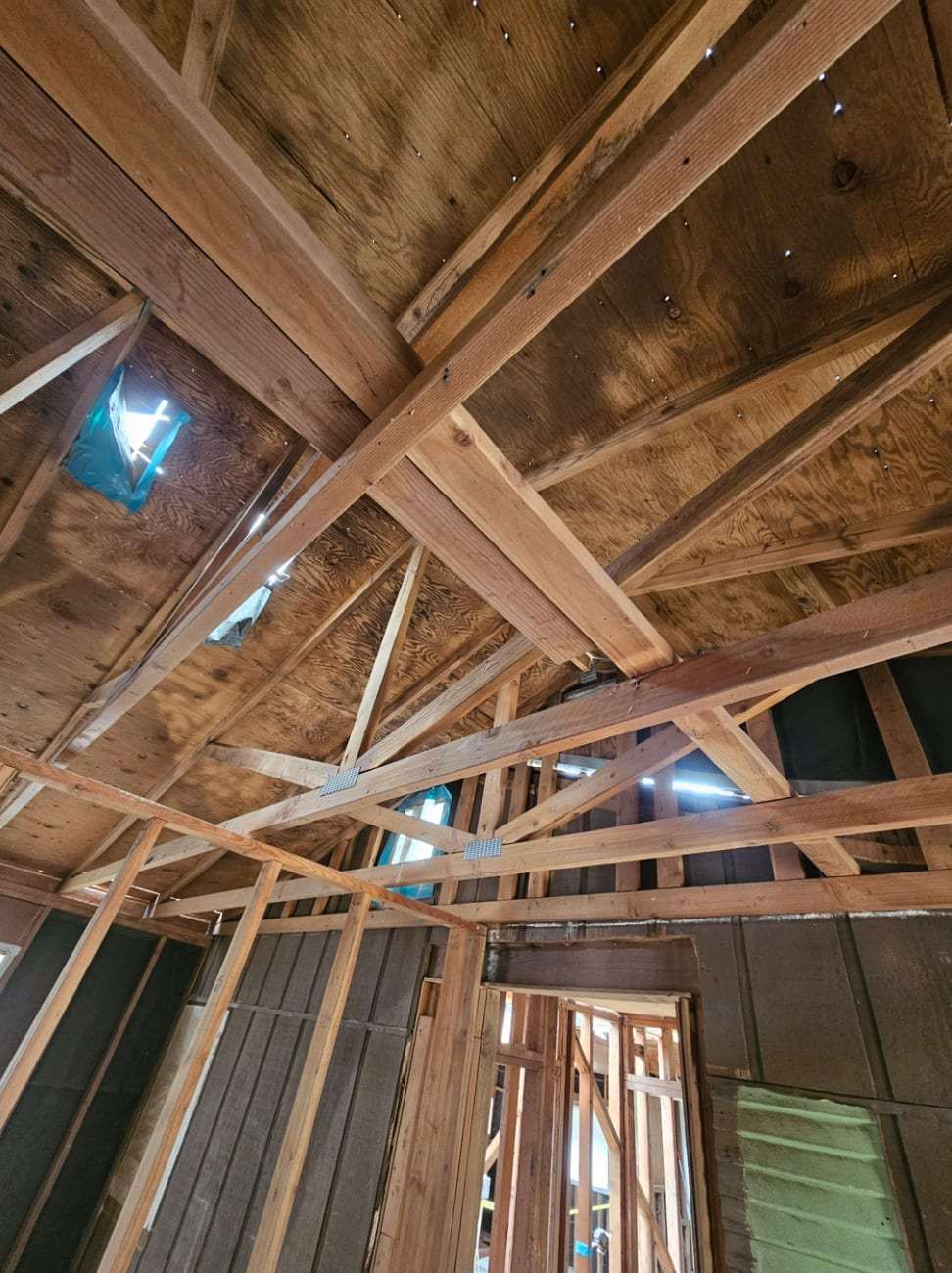
Some fire restoration companies cover both halves: the company that documents the damage and does the cleanup also does reconstruction and structural repairs, which keeps the scope consistent from the first estimate to the final walkthrough. Others hand the rebuild to a separate contractor.
Ask any company you're considering whether it does both mitigation and general contracting, and ask for proof of insurance before work starts.
Longer guides and planning tools for each lane of a Westminster fire job, from board-up to final walkthrough.
These guides cover the part of fire recovery that lasts longest: putting the building back.
A fire rebuild produces paperwork, decisions and inspections for months.
Each scenario here is hypothetical, built from situations common to the housing around Westminster: ranches and split-levels from the 1960s and 1970s, attached townhomes, and small commercial suites.
Westminster sits across two counties, and the cities around it each run their own permit and inspection systems.
Every fire job moves through the same three lanes. Knowing them helps you understand where your project stands and why some work has to wait.
Secure
Board-up
Windows and doors covered; roof tarped if open
Debris out
Burned and wet material removed
Utilities
Power and gas checked before work
Clean
Soot removal
Surfaces cleaned by residue type
Odor control
Treated before anything is sealed
Contents
Belongings inventoried, cleaned, stored
Rebuild
Structure
Framing and roof repairs, with permits
Systems
Electrical, plumbing and HVAC by licensed trades where required
Finishes
Drywall, paint, flooring, cabinets
ZIP codes served: 80030 (Westminster), 80031 (Westminster), 80005 (Arvada), 80234 (Denver), 80021 (Broomfield).
Also nearby: 80003, 80221, 80260, 80229, 80212, 80004, 80002, 80211, 80216, 80033, 80202, 80233, 80205, 80214, 80020, 80204, 80215, 80241.
Westminster straddles Adams and Jefferson counties between Denver and Boulder along the US 36 corridor. Its housing ranges from 1960s and 1970s neighborhoods in the older southern part of the city to newer subdivisions and townhome communities farther north, along with commercial centers and mixed-use development.
Attached townhomes and shared-wall buildings are common, which means a fire in one unit can affect several. When a fire crosses unit lines, ask whether a restoration company has worked with HOAs, property managers, and multiple insurance carriers on the same job.
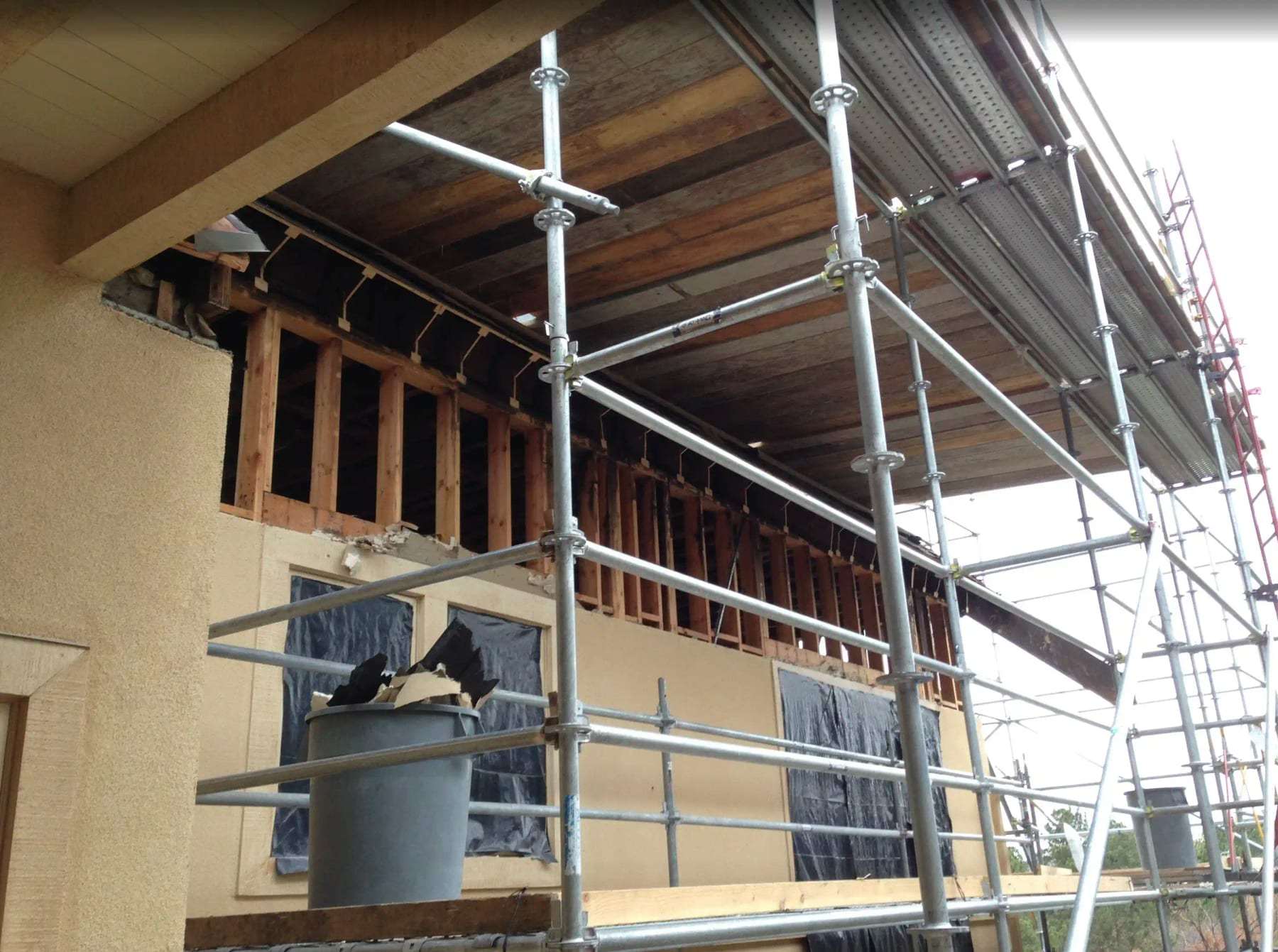
When the cleanup crew and the rebuild contractor are different companies, the homeowner can end up in the middle: scheduling handoffs, settling disputes over who removes what, and explaining the job twice to the insurer. Some fire restoration companies do mitigation, cleaning and reconstruction, so one estimate covers the whole scope and one contact answers your questions. Ask whether the company you're considering does, and which trades it subcontracts.
A fire in the garage damages the shared wall, the room above, and the roof structure, and the rest of the house has smoke damage.
A fire in an adjoining townhome damages the shared wall and fills a neighbor's unit with smoke, and the owner needs cleanup and wall repairs.
A small fire in a retail suite is contained, but smoke and firefighting water affect adjoining tenants.
Most fire recoveries move through clear phases. Ask for a schedule by phase so you always know what's happening next.
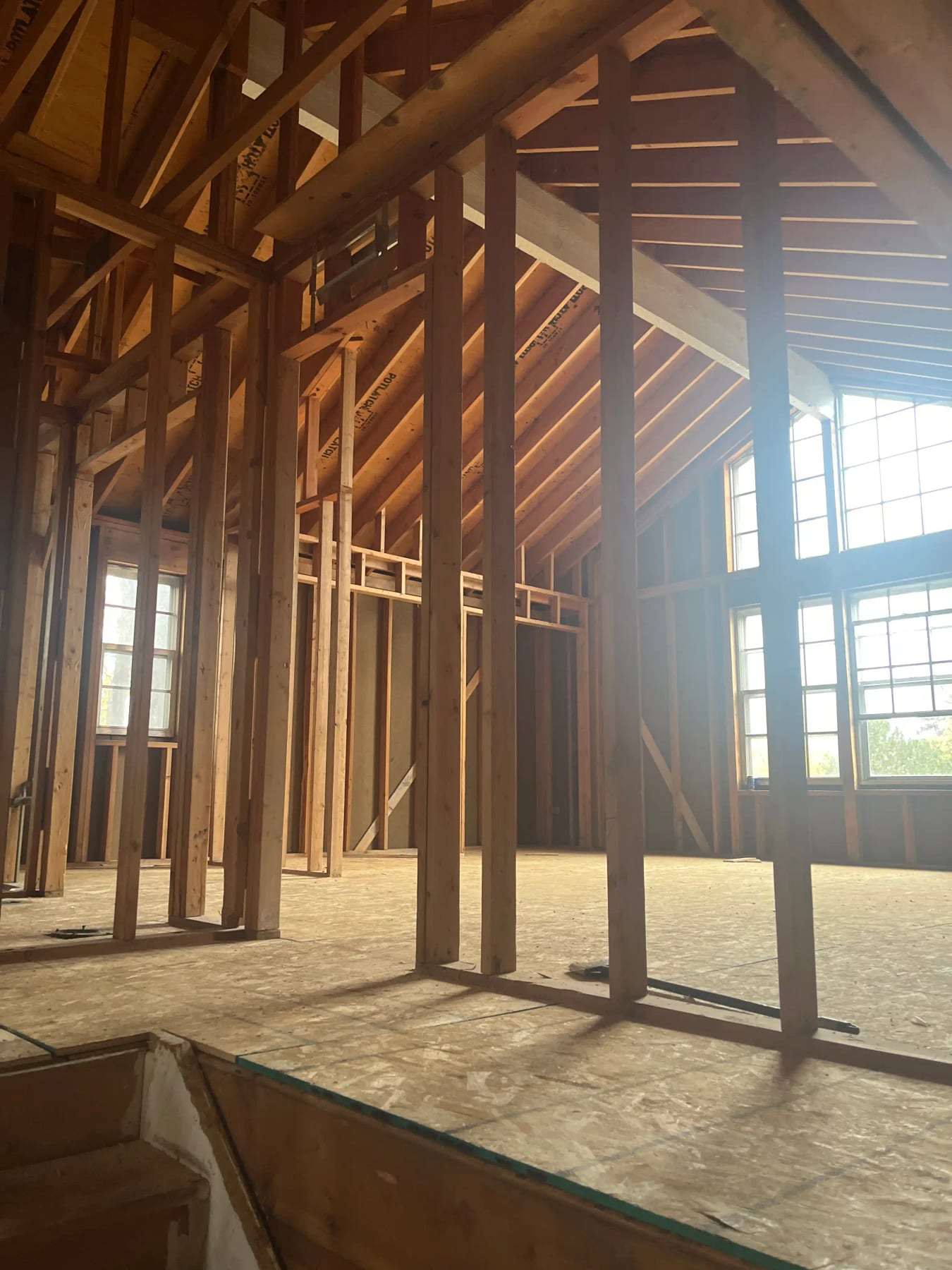
Board-up, tarping, and water removal to stop further damage.
Document structural, smoke, and water damage with photos and an itemized estimate.
Remove what's unsalvageable, then clean soot and treat odor in what remains.
Pull required permits and rebuild framing, roofing, drywall, and systems.
Install finishes, complete final inspections, and review the work with you.
This form is not connected. This website is a draft preview: no business has been confirmed to receive requests, so the fields below are switched off and nothing can be sent. In an emergency, call 911.
Wait for the fire department's release, call your insurer, and photograph everything. Then choose a fire restoration company you have checked to secure the property, document the damage, and manage repairs. Call 911 for any danger.